Hand Drawn Chemistry Laboratory Elements
Bringing Science to Life with Doodle-Style Illustrations
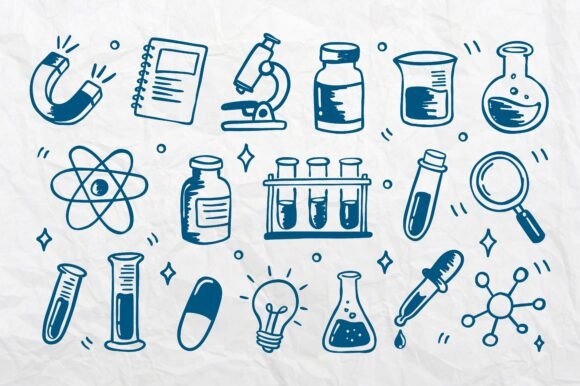
Hand Drawn Chemistry Laboratory Elements offer a creative way to visualize scientific concepts through charming, sketch-style icons. Featuring familiar lab tools like microscopes, test tubes, flasks, and atoms, these illustrations blend education with artistry. Designed with clean lines and a playful aesthetic, they’re ideal for a wide range of educational and creative uses.
Who Benefits from These Science-Themed Doodles?
Different users find value in these elements for different reasons. For educators, they provide a visually engaging way to explain chemistry topics. Bloggers and content creators use them to enhance science-related posts or infographics. Small business owners may incorporate them into branding or product design for educational stores or science-themed merchandise.
Uses for Educators and Students
In the classroom, visual learning tools can make complex topics more accessible. Teachers can use these illustrations in worksheets, presentations, or classroom posters to explain lab procedures or molecular structures. The doodle style helps reduce the intimidation factor of chemistry, especially for younger students or those new to the subject.
- Design interactive science activity sheets
- Create visually appealing lesson plans
- Make classroom decorations that reinforce learning
- Support digital learning with illustrated slides
For students, these elements can be used in project reports, science fair displays, or personal study guides. The hand-drawn look adds a personal touch that makes learning materials feel less formal and more approachable.
How Creators and Designers Can Use These Elements
Graphic designers and digital creators appreciate the flexibility of Hand Drawn Chemistry Laboratory Elements. Since they come in vector formats like SVG and EPS, they can be resized without losing quality. This makes them ideal for both print and digital projects.
- Customize icons for educational websites or apps
- Incorporate into digital stickers or planner pages
- Design science-themed branding materials
- Create printable science posters or infographics
- Use in digital scrapbooking or journal layouts
Because the elements are easy to edit and recolor, creators can match them to different design themes or brand colors. The clean line art ensures they remain professional while still feeling handcrafted.
Entrepreneurs and Business Owners: Adding Value to Products
For small business owners in the education or stationery space, these illustrations can be a valuable asset. Whether you're designing science-themed stickers, lab notebooks, or children’s science kits, the doodle style appeals to both kids and adults.
Some practical uses include:
- Creating themed product packaging
- Designing printable science activity books
- Producing branded classroom resources
- Developing educational merchandise like mugs or tote bags
Because the files are scalable and available in multiple formats, they can be used across a variety of product types. This makes them a versatile investment for businesses that cater to science educators, homeschoolers, or curious learners.
Beginners vs. Experienced Users: What to Consider
If you're new to design, look for elements that are easy to work with. Hand Drawn Chemistry Laboratory Elements come in formats compatible with common design tools like Adobe Illustrator, Canva, and Inkscape. This means you can start using them even if you're not a professional designer.
Experienced users may appreciate the ability to layer, recolor, and combine elements creatively. Vector files allow for detailed customization, making it easy to adapt the illustrations for different design contexts without losing clarity.
Factors to Consider When Choosing Science Illustrations
When evaluating whether these elements are right for your needs, consider the following:
- Quality: Vector-based artwork ensures crisp visuals at any size.
- Flexibility: Multiple file types (JPG, SVG, EPS) support both print and digital use.
- Ease of Use: Clean lines and organized files make editing straightforward.
- Commercial Use: These elements can be used in both personal and business projects.
- Creativity: The doodle style encourages playful, engaging designs.
Whether you're a teacher preparing a lesson or a blogger designing a science-themed post, these elements offer a balance between functionality and visual appeal.
Matching the Elements to Your Project
If you're working on a science-related project, ask yourself:
- Do I need illustrations that are both educational and visually engaging?
- Will I be using them in print, digital, or both formats?
- Am I comfortable editing vector files, or do I need ready-to-use images?
- Is a playful, hand-drawn style appropriate for my audience?
These elements shine in projects that benefit from a friendly, approachable tone. They may not be the best fit for highly technical or formal scientific publications, but they’re perfect for educational content aimed at students, hobbyists, or casual learners.
Final Thoughts: A Versatile Tool for Science Communication
Hand Drawn Chemistry Laboratory Elements offer a unique way to blend science with creativity. Whether you're designing a classroom poster, creating digital content, or launching a science-themed product line, these illustrations provide a flexible, high-quality solution. Their clean, doodle-style design makes them accessible to a wide audience, while their vector format ensures they remain sharp and adaptable across different uses.
For educators, creators, and entrepreneurs alike, these elements offer both practicality and charm—making science not just informative, but also fun to explore and share.